
You missed your quarterly payments and your stomach dropped. This is fixable, and you're not going to jail. The fix is straightforward and annoying: figure out what you owe, pay what you can right now, and deal with the penalty that's already piling up.

Here's the thing about that penalty. It isn't a flat late fee. It works like interest. The IRS looks at how much you should have paid each quarter, how many days it sat unpaid, and charges interest on the shortfall. The rate is the federal short-term rate plus 3 percentage points, and it compounds daily. So an electrician who skipped all four payments on a $4,000 estimated tax bill isn't looking at a $200 slap on the wrist. She's looking at interest that started clocking back in April and keeps growing until she pays. Every day she waits, the number gets bigger.
The penalty is calculated per quarter, not per year. You can pay the right total tax for the year and still get penalized for missing a quarter.
That's the detail that trips people up. A photographer who had a killer fourth quarter and sends the IRS a big check in December might think she's covered. She paid the right total, right? Doesn't matter. The IRS looks at each quarter separately. She underpaid in Q1, Q2, and Q3, and the penalty grew for every one of those days even if she caught up later.
Step one: pay something today
Don't wait until you've figured out the perfect number. If you know you owe roughly $6,000 for the year and you've got $2,000 sitting in the bank, send the $2,000 now. Partial payments shrink the unpaid balance that interest is charged on, so they reduce the penalty.
You can pay through IRS Direct Pay or EFTPS online. Both give you instant confirmation. No checks to mail. Most states have their own electronic portals too, and if your state has an income tax, you probably owe estimated payments there as well.

Step two: figure out what you actually owe
This is where it gets real. You need a real estimate of your total tax for the year, including both income tax and self-employment tax. Self-employment tax is the 15.3% that covers Social Security and Medicare, the stuff W-2 employees split with their employers but you pay solo.
The IRS has a worksheet for this on page 8 of Form 1040-ES. You don't submit it. You just use it to run the math. Add up your expected income, subtract your business expenses and any other deductions, calculate the tax, and divide by four.
If your income is uneven, and most self-employed people's income is wildly uneven, there's a better option called the annualized income installment method. Instead of dividing your total by four, you calculate each payment based on what you actually earned by that point in the year. A food-truck owner who does 70% of her business between March and July shouldn't be making equal payments in January and September. This method lets her pay more when she's flush and less when she's not. The tradeoff: the math is more involved, and you attach Form 2210 to your return to show your work.
Step three: understand the safe harbor
More on the penalty math in a minute. First, the escape hatch. There are safe harbor rules that can protect you from the underpayment penalty entirely, even if you missed every quarterly deadline.
If you pay at least 90% of your current year's tax, or 100% of last year's tax liability, whichever is smaller, you generally won't owe a penalty. If your adjusted gross income was over $150,000 last year, that 100% jumps to 110%.
So a barber who owed $12,000 in tax last year and is having a much better year this year can just pay $12,000 total across his quarterly payments and skip the penalty, even if his actual tax this year turns out to be $18,000. He'll still owe the $6,000 difference at tax time. But no penalty for underpaying during the year.
This is the single most useful rule for self-employed people with growing income. If you're not sure what your income will be, peg your payments to last year's tax and you're shielded from the penalty. The catch is you need to know what last year's total tax liability was. That's on line 24 of your Form 1040.
What the penalty actually looks like
The IRS calculates the underpayment penalty using Form 2210. They divide the year into four payment periods, figure out how much you should have paid each period, and charge interest on any shortfall for the days it went unpaid. The rate is the federal short-term rate plus 3 percentage points, and it changes quarterly.
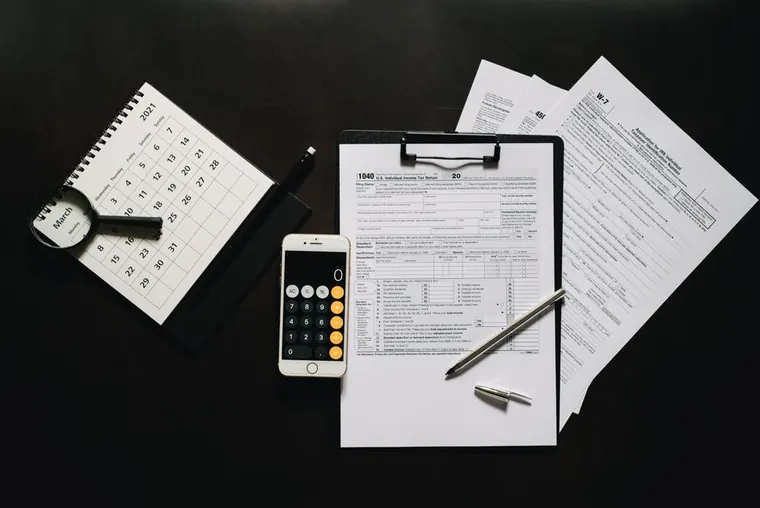
For a rough sense of scale: if a Savannah-based consultant underpaid by $3,000 for a full quarter, the penalty for that quarter alone could run somewhere in the low hundreds. Multiply that across four quarters of missed payments and the numbers start to feel real.
The IRS often calculates this for you and sends a bill. You can also calculate it yourself using Form 2210. That's worth doing if you think the IRS number is wrong or if you qualify for the annualized income method.
What if you can't pay the full amount?
Owing money you can't pay is different from owing money you don't want to pay. The IRS has payment plans for balances under $50,000. Getting on one reduces the failure-to-pay penalty rate to 0.25% per month. That's a real reduction from the standard rate, and it tells the IRS you're engaging rather than hiding.
You can also request a penalty waiver. The IRS may waive the penalty if you missed a payment because of a casualty, disaster, or incapacitation. If a hurricane rolled through Tybee and took your records with it, that's a real reason. "I forgot" is not, which is why most people won't qualify for a waiver but should know it exists.
The judgment calls that cost real money
Here's where this stops being a checklist and starts being a planning exercise. Do you use last year's safe harbor number or try to match this year's actual income? Do you annualize, or is the math not worth it for your situation? Should you adjust W-4 withholdings if you have a part-time W-2 job on the side? Can you file by February 1st to skip the January 15th payment entirely?
These are the calls where getting it wrong costs real money. In penalties, yes, but also in overpaying the IRS throughout the year and starving your business of cash it needs. A wedding photographer who overpays her estimated taxes by $4,000 to feel safe is lending the IRS money interest-free. That cash could have gone toward a new lens kit or a deposit on studio space.
That's the work we do at Nomadica. We look at your actual income, your actual expenses, last year's numbers, and the safe harbor thresholds, and we tell you exactly what to pay each quarter. Not a guess. Not "set aside 30% and hope." A real number based on your real books.
If you're staring at a year of missed payments and trying to figure out your next move, send us your numbers. We'll calculate what you owe, tell you what to pay right now, and set up a quarterly rhythm that keeps you out of penalty territory going forward.